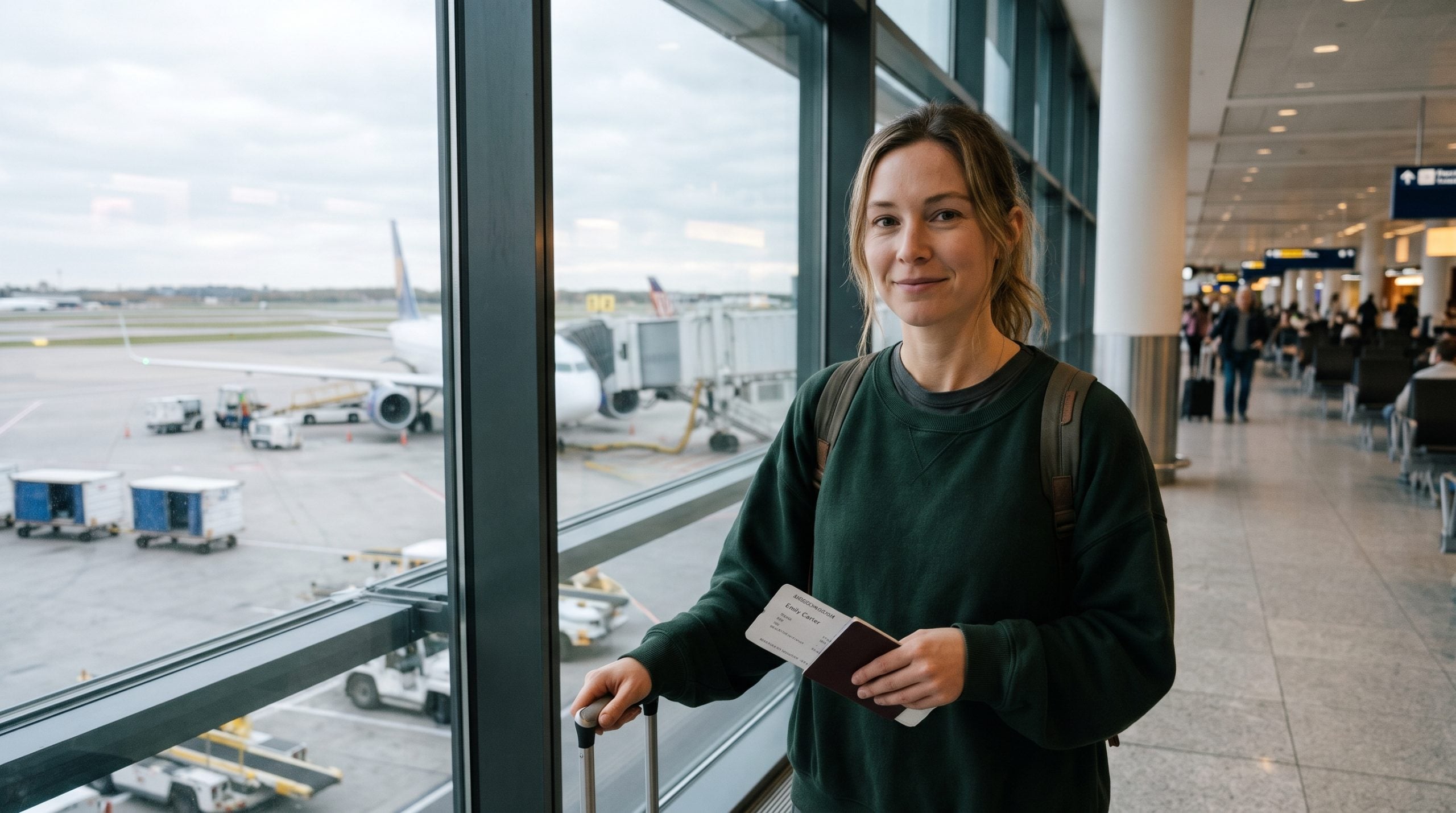
 Emily Carter
I have spent a good part of my career standing near airline counters, watching travelers react to airline baggage fees in real time. You can see it on their faces. At first, the fare looked like a bargain on the booking screen. Now, however, the agent wants another forty or fifty dollars before the bag can go down the belt.
Multiply that by a family of four and a return flight. Suddenly, the “cheap” trip has picked up the price of a nice dinner out.
These charges are no longer a small extra you can shrug off. In fact, in 2026 airline baggage fees became one of the biggest variables in what a flight actually costs. On top of that, the gap between carriers is wider and stranger than most people realize.
This guide breaks down where checked bag prices stand right now. It also compares the major and budget airlines, explains why the numbers keep climbing, and shows how to pay less or nothing at all.
How Airline Baggage Fees Got Started
It is easy to forget that checking a bag used to be part of the ticket. The shift actually started with a single carrier during a fuel crisis. American announced a $15 charge in May 2008, with its chairman pointing to high oil prices, and the fee began that June.
Soon after, competitors followed within months. As a result, the idea that a checked suitcase was an extra, not a given, settled into the industry.
The Last Holdout Falls
For years, one airline stood apart. Southwest built its whole identity around free bags. In fact, plenty of travelers I know planned entire itineraries around it.
Eventually, that era ended in 2025. Southwest dropped its “Bags Fly Free” policy on May 28, 2025, charging $35 for a first bag and $45 for a second. Once the last big holdout began charging, most domestic economy flyers had no free option left.
That, in turn, set the stage for what happened next.
The Spring When Airline Baggage Fees Jumped
If you booked a domestic flight in spring 2026, you probably noticed. Within a few weeks, nearly every major United States airline raised its checked bag prices. Moreover, almost all of them blamed the same thing: jet fuel.
JetBlue and United Go First
To begin with, JetBlue moved first. In late March, it raised its prepaid first bag fee to $39 during off peak periods and $49 during peak periods.
United came next, and its change set the template. A first bag now costs $45 prepaid or $50 within 24 hours of departure. A second bag runs $55 prepaid or $60 late. A third bag jumped from $150 to $200.
Delta and Southwest Follow
Within days, Delta followed. For tickets bought from April 8, 2026, its first bag costs $45 prepaid or $50 at the airport, a second bag $55, and a third bag $200. Long haul international routes, however, were left alone.
Similarly, Southwest raised prices again less than a year after ending free bags. From April 9, 2026, it charges $45 for the first bag and $55 for the second. A third bag stays at $150.
Is Fuel the Real Reason?
To be fair, the fuel argument was not invented from thin air. United’s CEO told investors that fuel had already added about $400 million to operating costs, and Delta and American reported similar figures.
Still, will airline baggage fees come back down if fuel prices ease? History is not encouraging. After all, since that first 2008 charge, the direction has been one way.
Airline Baggage Fees Compared, Carrier by Carrier
Here is how domestic economy fees stack up for a standard bag under 50 pounds. Even so, always confirm on the airline’s own site before you fly. That is because fees depend on route, fare type, and the date you bought your ticket.
What Airline Baggage Fees Cost on the Big Three
American Airlines. If you wait, American charges a premium. Since April 9, 2026, its first bag costs $50, or $45 prepaid. Meanwhile, the second costs $60, or $55 prepaid.
In addition, American added a twist for its cheapest tickets. From May 18, 2026, basic economy passengers pay $5 more per bag on top of the new fee.
United Airlines. When prepaid, United charges $45 for the first bag and $55 for the second. However, paying in the final 24 hours adds $5 per bag. A third bag, meanwhile, costs $200.
Delta Air Lines. On domestic routes, Delta charges $45 for the first bag and $55 for the second. Likewise, a third bag costs $200. Long haul international allowances did not change.
Other Major Carriers
Southwest Airlines. Here, the first bag costs $45 and the second costs $55. On the other hand, its third bag is a comparatively lower $150.
Alaska Airlines. Not surprisingly, this carrier landed in the same place. For flights bought on or after April 10, 2026, the first bag is $45 and the second is $55.
Hawaiian Airlines. Within North America, fees run $45 and $55. Within Hawaii, though, a first bag costs only $30. So, interisland hops remain a good deal for travelers with real luggage.
JetBlue. Prices here vary by travel date. For example, a prepaid first bag starts at $39 in quieter periods and $49 in busier ones.
The Short Answer
In short, for most mainstream carriers, a first bag now costs about $45 each way. Likewise, a second costs about $55 if you pay ahead. The real differences in airline baggage fees, however, hide in the details. So watch the late payment penalty, the third bag price, and any fare type surcharge.
Budget Carriers and Airline Baggage Fees
The budget carriers, by contrast, play a different game. Many skip a single national price. Instead, they use dynamic pricing that shifts by route, date, and when you add the bag.
Allegiant and Breeze
Allegiant is a good example. Its bag fees run from $15 to $70 each way depending on the airports, while paying at the airport costs $75. On the right route, booked early, Allegiant can therefore beat the legacy carriers. If you wait until the airport, however, it costs more than any of them.
Similarly, Breeze uses route based pricing. Bags added at the airport cost $75 per bag, per flight.
Frontier’s Surprises
Travelers most often get caught on Frontier. For instance, on one sample trip PIRG priced, Frontier charged at least $69 for a first checked bag and another $69 for a cabin bag. That adds up to $138 before you even board.
Beyond that, Frontier uses a lighter weight cap. Most airlines allow 50 pounds and 62 linear inches, but Frontier’s limit is 40 pounds. So if you usually pack right to 50 pounds, that gap can trigger a surprise overweight charge.
Spirit Is Gone
One name is now missing from the list. Spirit Airlines went out of business on May 2, 2026, after 34 years.
Whatever you thought of its pay for everything model, the absence matters. With fewer ultra low cost rivals, there is less pressure on everyone else to keep total costs down.
The lesson I keep repeating, then, is simple. A low budget fare is only a bargain once you add the bags. In fact, on many routes, a legacy ticket that costs $40 more ends up cheaper once airline baggage fees are counted.
Why Airline Baggage Fees Keep Climbing
Fuel is the reason airlines gave this year. Yet it is not the whole story. Over time, bag charges have become a reliable and enormous source of income. The federal numbers, in particular, make that plain.
Airline Baggage Fees in the Federal Data
According to the Bureau of Transportation Statistics, United States airlines collected $7.4 billion in baggage fees in 2025, or 2.9% of operating revenue. Furthermore, AARP notes that this total is 162 percent higher than five years earlier.
The previous year set a record too. In 2024, airlines earned $7.27 billion from bags, led by American at $1.5 billion, United at $1.33 billion, and Delta at $1.06 billion.
For contrast, Southwest collected only $83 million in 2024 because it still let two bags fly free. That, in turn, goes a long way toward explaining why the policy did not survive.
The Tax Angle
There is also a tax angle that rarely makes the evening news. Specifically, bag fee revenue is not subject to the 7.5% federal excise tax that applies to domestic airfares.
Put simply, a dollar collected through airline baggage fees can be worth more to a carrier than a dollar of fare. Consequently, carriers have every reason to keep base fares low and shift costs into extras.
The Fight Over Airline Baggage Fees Disclosure
For a while, it looked like travelers would at least get clearer information. In 2024, the Department of Transportation finalized a rule requiring bag fees to be shown up front. Unfortunately, it never took effect.
The Court Ruling
Airlines challenged the rule in court and won. On February 3, 2026, the full Fifth Circuit ruled that the department broke federal administrative law when it issued the rule.
Notably, the ruling focused on process, not policy. In other words, the judges did not decide whether carriers should disclose fees. Rather, they objected to how the department drafted the rule.
What It Means for You
As a result, the burden is back on you. Some airlines show bag prices early in booking, whereas others do not. Third party booking sites, meanwhile, vary even more.
Until a new rule arrives, assume nothing. Instead, check the airline’s own bag fee page or calculator before you pay.
Hidden Costs Behind Airline Baggage Fees
Everyone talks about the $45 first bag fee. However, it is rarely the only charge a traveler with real luggage pays. Below are the extras that trip people up most often.
Late Payment and Extra Bags
Paying at the airport. Several airlines charge more at the counter or inside the final 24 hours. On American, for example, that means $5 more per bag, per direction. On budget carriers, meanwhile, the jump can be much bigger.
The third bag. Families and long trip travelers get hit hardest here. At $200 on Delta and United, a third bag can even cost more than a short domestic flight. Southwest’s $150 is gentler, but still steep.
Weight, Size, and Fare Type
Weight and size. Generally, the standard ceiling is 50 pounds and 62 linear inches. Frontier’s 40 pound limit, however, is the exception that catches people. Because overweight and oversize charges usually far exceed the base fee, a bathroom scale and a tape measure are worth five minutes before you leave.
Basic economy surcharges. On paper, American’s extra $5 for basic economy bags looks small. Still, it signals where airline baggage fees may be heading. Soon, bag prices may differ by fare type, not just by route.
How to Pay Less on Airline Baggage Fees
Fortunately, the system is full of exemptions. In fact, many travelers already qualify for one without knowing it.
Cards, Status, and Military Benefits
Use the right credit card. For occasional flyers, cobranded airline cards are the most reliable way to skip these charges. For example, United still gives a free first bag to cardholders, some loyalty members, active military, and premium cabin travelers. Delta, American, Southwest, and Alaska also run similar programs.
So if your household takes two or three round trips a year with bags, the card’s annual fee often pays for itself.
Check your elite status. Even entry level elite tiers at many airlines include a free checked bag. Therefore, if you fly one airline often for work, keep your travel there.
Military travelers. Active duty service members generally keep free bags across the major carriers. Southwest, for instance, confirmed that eligible cardholders, certain loyalty members, and active duty military still get a free first bag.
Smarter Booking Habits
Prepay, always. If you know you will check a bag, pay online when you book. At the latest, pay a day before. Honestly, it is the easiest savings in this guide.
Consider a higher fare class. Premium cabins and some upgraded economy fares include bags. So do the math. For example, an upgrade that costs $60 and covers $100 in bag fees is the better deal.
Travel lighter. Cabin bags are still free on the legacy carriers and Southwest, as long as they fit the overhead bin. Before you rely on that, check each airline’s carry-on luggage size limits so your bag does not get sent to the hold at the gate. Admittedly, it takes practice. Even so, packing cubes and a willingness to rewear clothes go a long way.
Ship it. For ski trips, golf trips, or long stays, a ground shipping service can compete with $200 third bag fees. Plus, you skip hauling heavy gear through two airports.
Track what you check. If you’re paying $45 or more to check a bag, it makes sense to know where it is. A good luggage tracker shows you whether your bag made the connection before you reach the carousel.
What It Looks Like on a Real Trip
Abstract fees rarely feel real until you add them up. So let me put numbers on a typical scenario.
How Airline Baggage Fees Hit a Family of Four
Picture a family of four flying round trip on a major domestic carrier. Each person checks one bag. At $45 per bag each way prepaid, that comes to four bags, two flights, $45 each. Altogether, the total is $360 in bag fees alone.
Now say they forget to prepay on American and pay $50 at the airport. In that case, the total rises to $400. Furthermore, if two of them add a second bag at $55 prepaid, that is another $220 for the round trip.
The Same Trip With the Right Card
Next, give that family one cobranded airline card. Several major programs cover a free first bag for everyone on the reservation. As a result, the bag cost on that trip drops close to zero.
That single choice can save a family several hundred dollars a year during school holidays.
By comparison, run the same exercise on a budget carrier with a $69 bag fee. The “cheap” ticket quickly loses its edge. That is exactly why I tell readers to compare the full trip cost, not the fare.
The Bottom Line on Airline Baggage Fees
In 2026, airline baggage fees have settled into a new normal. Most major carriers now charge about $45 for the first bag and $55 for the second. Budget airlines, meanwhile, range far below or far above that, depending on route and timing.
Although the spring increases were blamed on fuel, the federal data shows bag charges have climbed steadily for years. And with the disclosure rule gone, travelers are on their own when spotting the true cost.
After years on this beat, my advice is the same advice I give friends and family. First, price your trip with the bags included. Then, prepay every time. Also, know your exemptions. Finally, when a fare looks too good to be true, open the bag fee calculator before you click buy.
In the end, the difference between a smart booking and an expensive one is usually about five minutes of homework.
Frequently Asked Questions About Airline Baggage Fees
How much does a checked bag cost on major United States airlines in 2026?
Generally, major carriers charge about $45 for the first bag and $55 for the second, each way, when prepaid. American, however, charges $50 and $60 at the airport, or $45 and $55 online. For a full breakdown, see PIRG’s airline bag fee guide.
Why did airline baggage fees rise in 2026?
Carriers pointed to a sharp rise in jet fuel prices in spring 2026. For the timeline airline by airline, read Afar’s coverage of the fee increases.
Does Southwest still offer free checked bags?
Not for most travelers. After ending free bags in May 2025, the airline raised fees again in April 2026 to $45 and $55. Still, some elites, cardholders, and active duty military fly with free bags. Read more at The Points Guy.
Is it cheaper to pay for checked bags online or at the airport?
Online, almost always. American, United, and Delta charge more at the airport or in the final 24 hours. Similarly, Allegiant and Breeze charge $75 per bag at the airport. AARP’s baggage fee guide covers each airline’s prepayment rules.
Do airlines have to show baggage fees before I book?
Not currently. In February 2026, a federal court struck down the 2024 disclosure rule. For details, see Bloomberg Law and AirlineGeeks.
How much revenue do airline baggage fees generate?
In 2025, United States carriers collected $7.4 billion in bag fees, according to the Bureau of Transportation Statistics. Meanwhile, in 2024, American led all carriers with about $1.5 billion, per ConsumerAffairs.
What is the weight limit for a checked bag?
Typically, carriers cap standard checked bags at 50 pounds and 62 linear inches. Frontier, however, is the notable exception at 40 pounds. To compare limits by airline, check the PIRG guide.
References
- US Airlines Profited $6.0 Billion in 2025, Bureau of Transportation Statistics
- A Traveler’s Guide to Airline Checked Baggage Fees, AARP
- Checking Bags on a Flight: How Much Does My Airline Charge?, PIRG
- These Airlines Have Just Raised Their Checked Bag Fees, Afar
- Southwest Hikes Bag Fees Less Than a Year After Ending Bags Fly Free, The Points Guy
- Southwest Hiking Baggage Fees Again Amid Fuel Costs, Fortune
- Get Ready for Higher Checked Luggage Fees When You Fly, Frommer’s
- Airline Passengers Paid $7.27 Billion to Check Bags in 2024, ConsumerAffairs
- Biden Era Airline Fee Disclosure Rule Nixed by Fifth Circuit, Bloomberg Law
- Airline Fee Disclosure Rule Thrown Out, AirlineGeeks
- Spirit Airlines Goes Out of Business After 34 Years, PBS NewsHour
- How to Avoid Checked Bag Fees, Daily Passport (link needed, see notes)
- Airline Checked Bag Fees Ranked, AeroCorner