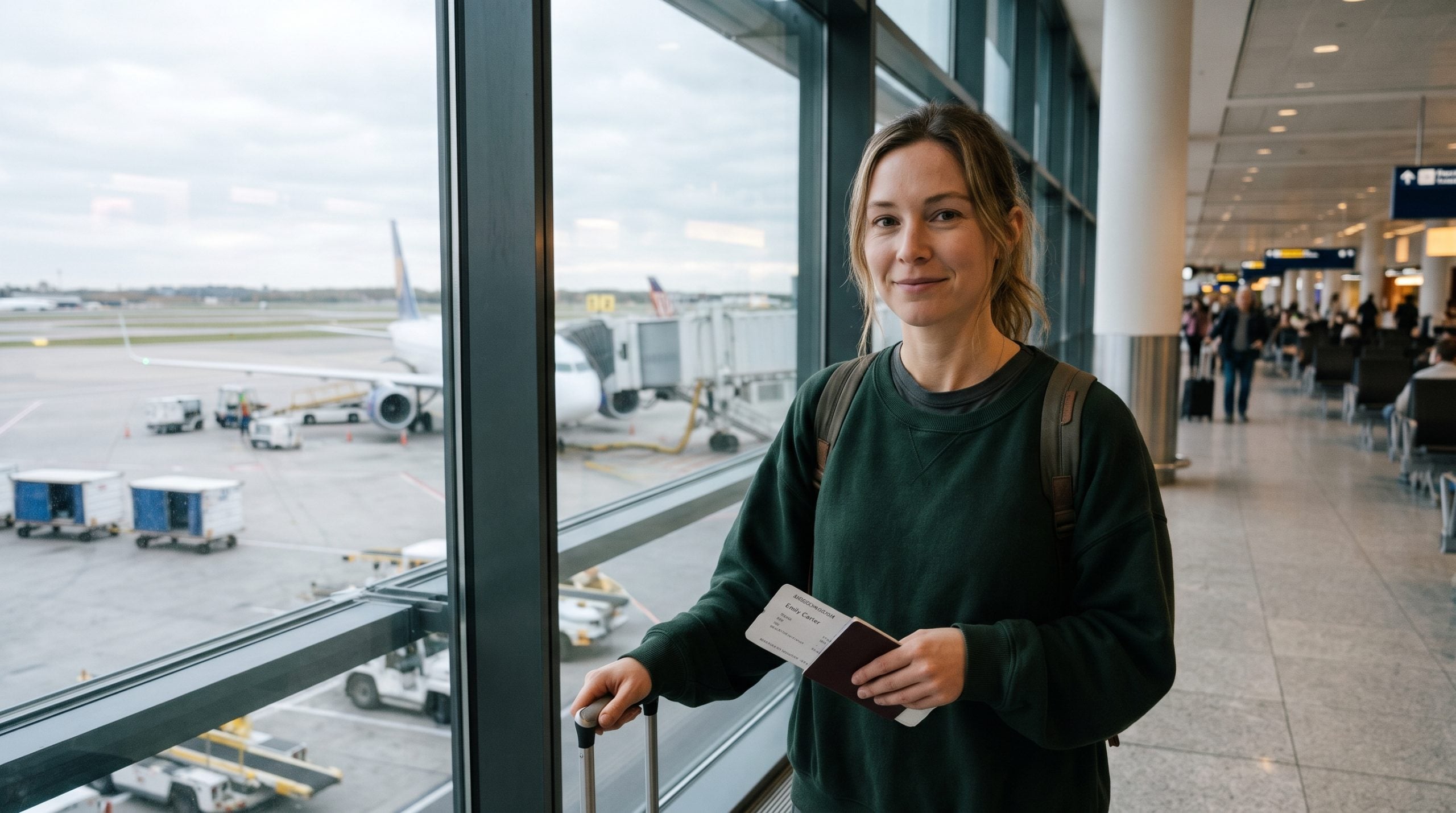
 Emily Carter
Every week, someone at an airport loses a power bank they paid good money for. They don’t lose it because they broke a rule on purpose. Instead, they lose it because nobody ever explained the rules clearly. I have spent much of my career on dangerous goods acceptance. That work has meant training check in agents, writing operator procedures, and sitting in on battery fire incident reviews. The question I hear most is simple. Can I take my power bank on a plane, and how big can it be? The short answer is yes, almost always. However, the full answer has more parts, and 2026 changed several of them.
This guide covers what I would tell a friend before a flight. First, it explains how to measure capacity and where the legal limits sit. Next, it covers what changed internationally this year, and why your airline may be stricter than the regulator. Finally, it shows how to pack a battery so it clears screening and stays safe in the cabin.
Why a Power Bank on a Plane Gets More Scrutiny Than Your Phone
People often wonder why a phone draws almost no attention while staff question the brick in their backpack. After all, both contain lithium ion batteries. From a hazmat point of view, though, the difference makes sense.
A power bank is a battery with no job except storing energy. It has no screen to warn you it is getting hot. Usually, it sits forgotten at the bottom of a bag. People drop it, sit on it, and charge it with whatever cable is lying around. Many are also cheap units with thin cell casings and very basic protection circuits. If a cell inside is damaged or flawed, it can go into thermal runaway. That is a chemical reaction inside the cell that makes its own heat. It can then spread to the cells next to it. Water cools it, but it does not “put it out” the way people expect. Meanwhile, the smoke is toxic and flammable.
What the Incident Data Shows
The numbers explain why regulators acted. The FAA verified 93 lithium battery incidents involving smoke, fire or extreme heat on aircraft in 2025. Battery packs made up the largest single category, ahead of vapes, phones and laptops. In fact, portable chargers account for roughly two in five lithium battery events in FAA records since 2006. Those are only the incidents the FAA could confirm. The industry view is that the real worldwide figure tops two thermal runaway events every week.
The event that changed the whole discussion was the Air Busan fire in January 2025. The aircraft burned on the ground in South Korea. Investigators traced the fire to a power bank in an overhead locker. Since then, nearly every airline policy change I have reviewed points back to that event in some way.
Watt Hours: The Number That Decides Whether a Power Bank Can Board a Plane
Most people shop for power banks by milliamp hours, the mAh figure in big print on the box. Aviation rules, however, don’t use mAh at all. Regulators write every limit for a power bank on a plane in watt hours, shown as Wh. That’s because watt hours measure the actual energy stored, and energy drives the hazard.
Many reputable power banks print the Wh rating on the casing. Usually, it’s in small text near the input and output specs. If yours has one, use that number, and you are done.
How to Calculate Watt Hours Yourself
If your unit shows no Wh rating, you can work it out. The FAA gives the basic formula: multiply the voltage by the amp hours. A power bank rated in milliamp hours simply needs one extra step.
- Find the mAh rating and the cell voltage on the label. Most lithium ion cells carry a nominal rating of about 3.6 or 3.7 volts.
- Divide the mAh figure by 1,000 to get amp hours.
- Multiply the amp hours by the cell voltage.
Here is the trap I see all the time. People use 5 volts because that is the USB output. Don’t. The rule applies to the battery, not the charging port, so use the nominal cell voltage printed on the unit.
Worked Examples
Here are a few examples at 3.7 volts:
- A 10,000 mAh bank is 10 Ah times 3.7 V, which equals 37 Wh.
- A 20,000 mAh bank works out to 74 Wh.
- A 26,800 mAh bank comes to about 99 Wh, just under the line. That explains why manufacturers sell so many units at that oddly specific size.
- A 30,000 mAh bank comes to about 111 Wh, which puts it in the approval band.
- A 50,000 mAh bank comes to about 185 Wh. As a result, it cannot fly on a passenger aircraft at all.
For reference, IATA notes that a typical laptop battery holds about 60 Wh. Most phone sized power banks fall well below that.
The Three Capacity Bands for a Power Bank on a Plane
The FAA’s PackSafe guidance sorts rechargeable lithium ion batteries into three bands. The international rules follow the same structure.
Up to 100 Wh
This band covers almost every power bank an ordinary traveler owns. Under the baseline rules, these go in your carry on bag, and you need no airline approval. The limit applies per battery.
101 to 160 Wh
This band covers the big units that photographers, drone pilots and remote workers rely on. You need your airline’s approval for these. In addition, the FAA caps them at two spare batteries per person in this range. In practice, approval means contacting the airline before your trip. Some carriers want notice well before departure. Qatar Airways, for example, asks for the request at least 48 hours ahead. So don’t assume the gate agent can approve it on the day.
Above 160 Wh
Passenger aircraft cannot carry these at all, whether in carry on or checked baggage. The FAA states plainly that these large units are not allowed on passenger aircraft. That covers big power banks, portable power stations and battery generators over 160 Wh. This rule catches campers and RV owners all the time. They see “portable” on the box and assume it is cabin friendly. It is not. A 300 Wh power station is a cargo item. Even then, the shipper must follow the full dangerous goods regulations.
What Changed in 2026 for Every Power Bank on a Plane
For years, the international rules simply treated power banks as “spare batteries.” That changed on 27 March 2026. On that date, the ICAO Council approved an addendum to its Technical Instructions for dangerous goods. It took effect the same day. For the first time, power banks have their own provisions, separate from other spare batteries.
The Three Headline Changes
- A limit of two power banks per passenger. This applies no matter how small they are.
- No recharging power banks during flight. You may not plug your power bank into a seat USB port or aircraft outlet to top it up.
- Separate treatment for crew. Flight crew can still carry and use power banks as their duties require.
How IATA and National Regulators Followed
IATA followed with guidance documents for operators and for passengers. Both treat power banks as their own category rather than lumping them in with spare batteries. IATA tied the operator guidance to the 2026 edition of the Dangerous Goods Regulations. It runs to the end of 2026, when the next edition takes over. Expect the 2027 rulebook to build these provisions in more permanently rather than drop them.
Similarly, the UK Civil Aviation Authority’s summary spells out the same split. The rules now cover charging, use, storage and the number of power banks a person may carry. So if an older blog post calls power banks “spare batteries” and stops there, it is out of date.
What ICAO Left to the Airlines
Notice what ICAO did not do. It did not ban using a power bank to charge your phone during flight. Instead, ICAO left that decision to each airline, and plenty of airlines have now made it themselves.
Airline Rules for a Power Bank on a Plane Are Often Stricter
This part causes the most trouble at the gate. ICAO, the FAA and national regulators set the minimum. Airlines, however, can always go further, and since 2025 many have. Sometimes a passenger tells me “but the FAA allows it.” My answer never changes. The FAA allows it on aircraft, but the airline decides what it accepts on its own aircraft.
Airline Policies That Shaped 2026
- Lufthansa Group. The rules took effect on 15 January 2026 across Lufthansa, SWISS, Austrian, Brussels Airlines, Eurowings and the rest of the group. Passengers may carry two power banks at most. They may not use them on board and must keep them out of the overhead bin.
- Korean Air and its group carriers. Korean Air, Asiana, Jin Air, Air Busan and Air Seoul banned in flight power bank use from 26 January 2026.
- Qantas, Jetstar and Virgin Australia. These carriers moved early, with a two unit limit and a ban on in flight use from December 2025.
- Singapore Airlines and Scoot. Both ban using and charging power banks during flight. They also adopted the two unit limit in April 2026, under a Civil Aviation Authority of Singapore directive.
- Japan Airlines and ANA. Both adopted the two unit limit, with a 160 Wh ceiling per unit. They also banned in flight use from 24 April 2026.
- Emirates. Emirates allows only one power bank per passenger. It must stay under 100 Wh, and the capacity marking has to be clearly readable.
- Southwest Airlines. From 20 April 2026, Southwest limits passengers to one power bank of no more than 100 Wh.
- American Airlines. From 1 May 2026, American allows two power banks of up to 100 Wh each. It also bans recharging them on board. You may still use one to charge a device. However, it has to stay visible and within reach.
What This Means for Your Itinerary
Look at the pattern. Several of these airlines set a lower ceiling, 100 Wh, than the regulator’s 160 Wh. Several allow one unit instead of two. Many also ban using a power bank at all during flight. Picture a traveler flying American to Europe and back on Lufthansa. They could face three different rule sets in one trip. Battery rules vary by carrier, just like airline baggage fees do. So check the dangerous goods page of every airline on your itinerary, including codeshare and connecting flights. The operating carrier’s policy decides whether it accepts your power bank on a plane it flies.
Carry On Only: A Power Bank Belongs in the Plane Cabin, Never in Checked Baggage
This rule has not changed in years, but people still break it every day. A power bank on a plane must always travel in the cabin with you. The rules forbid power banks and spare lithium batteries in checked baggage. The TSA’s guidance says the same, and IATA applies the same rule worldwide.
That holds however you pack. Whatever it costs to check a bag, a power bank can never go in it. Likewise, moving dense gear into your carry on to dodge an overweight baggage fee is smart. Just make sure the battery stays with you in the cabin.
The reason is practical. If a battery fails in the cabin, someone notices the smell or the smoke. The crew can then act within seconds. Crews train for exactly this and carry containment equipment. In the cargo hold, by contrast, the aircraft relies on detection and suppression systems. Nobody designed those with a battery buried inside a suitcase in mind.
Gate Checked Bags and Smart Luggage
Two situations catch people out:
- Gate checked bags. The overhead bins sometimes fill up, and the agent takes your roller bag at the aircraft door. At that point, it becomes checked baggage. The FAA specifically says you must remove power banks and spare batteries first. So keep the power bank in your personal item, not your roller bag. That way, you never have to dig for it on a crowded jet bridge.
- Smart luggage. IATA treats a power bank built into a smart bag the same as any other power bank. If you plan to check the bag, the battery has to come out and travel with you. If you cannot remove the battery, you cannot check the bag.
Small trackers are a different story. A luggage tracker or an AirTag in your luggage runs on a tiny coin cell. The FAA allows these in checked bags because their batteries are far below the limits. Packing valuables in the cabin also protects you if your suitcase becomes delayed baggage.
Where to Keep a Power Bank on a Plane During the Flight
Storage location is the newest focus, and the reason goes straight back to the Air Busan fire. An overhead bin stays closed and out of sight, full of soft bags that burn. A failing battery in there can smoke for a while before anyone notices. The crew then has to open a bin full of smoke to reach it.
That explains why so many airlines now ask you to keep the power bank close. It must stay on your person, in the seat pocket, or in a bag under the seat. Lufthansa, Singapore Airlines, American and Southwest all keep power banks out of the overhead bin in some way. Even where an airline has not formally banned bin storage, I recommend this habit. If something goes wrong, you want to be the first person to know.
If your airline still lets you use a power bank to charge your phone, keep both devices in plain sight. Never leave a charging setup buried in a bag, wedged between seat cushions, or tucked under a blanket. Seats have mechanisms that can crush a battery. A crushed lithium cell, in turn, is far more likely to catch fire than an intact one.
Packing a Power Bank for a Plane Trip: Protection Against Short Circuits
After physical damage, the second biggest cause of battery trouble is an accidental short circuit. A loose battery rattling around with keys, coins or other metal can bridge its terminals. For that reason, the UK CAA’s guidance requires individual protection. You must protect each spare battery and power bank against short circuit when you are not using it.
What that looks like in practice:
- Keep the power bank in its original retail packaging, or in a small protective pouch of its own.
- If it has exposed terminals, as camera and drone batteries often do, cover them with electrical tape.
- Store it so nothing can switch it on by accident. Units with a push button can turn on when squeezed in a packed bag.
- Keep it away from loose metal items.
- Keep cables unplugged during flight unless you are actively charging and your airline allows it.
Labels, Unmarked Units and Damaged Batteries
When I train screening and acceptance staff, I tell them to look for the capacity marking first. If the unit shows no rating, staff have no way to confirm it falls under the limit. As a result, many will refuse it. Emirates makes a readable capacity marking an explicit requirement. Other carriers apply the same logic informally.
Has your power bank’s label worn off, or did it never have a proper one? Then the cheapest fix is to replace the unit before you travel. That beats arguing with an agent who is doing exactly what their training told them to do.
Signs a Battery Should Stay Home
Be equally strict with yourself about damage. Never fly with a battery that shows any of these signs:
- Swelling or bulging, including a casing that no longer sits flat or has started to split.
- Heat when it is not charging.
- A chemical or sweet smell.
- Dents, cracks or signs of a hard drop.
- Erratic charging, or a charge that drains much faster than it used to.
A damaged lithium battery is not something to “get one more trip out of.” Instead, recycle it properly, not in household trash. Then buy a replacement from a reputable brand that shows proper safety testing.
How Screening Staff Handle a Power Bank Before You Board the Plane
At US security checkpoints, the TSA screens power banks as carry on items. The TSA permits a power bank on a plane in your cabin bag. However, officers can stop anything that looks damaged, unlabeled or oversized. If you’re unsure about other gear, check what you can bring on a plane before you pack. Outside the US, the process looks similar. Some airports, though, now check power banks more closely at the boarding gate itself. That’s especially common on routes served by carriers with stricter policies.
If staff refuse a unit, you usually have few options at the gate. You may be able to hand it to someone who is not traveling. Alternatively, you can take it back landside if time allows. Most of the time, though, it ends up confiscated. Checking the rules before you leave home costs nothing. Finding out at the gate costs you the device.
What to Do If a Battery Overheats on Board
I hope you never need this section, but every traveler should know it. A power bank on a plane may start to get hot, smoke, swell or hiss. The same can happen with your phone or any other battery device. If it does, follow these steps:
- Tell the cabin crew immediately. Do not wait to see if it settles down.
- If it is plugged in, unplug it, but only if you can do that safely.
- Do not pick up a device that is actively smoking or burning.
- Do not try to cover it, hide it, or put it in a bag.
- Follow the crew’s instructions exactly.
The FAA makes clear that crews train for this and carry the equipment to deal with it. In my experience, the incidents that turn serious share one pattern. A passenger felt embarrassed and tried to handle it alone for several minutes before calling for help. Those minutes matter.
My Pre Flight Checklist
I use this routine myself, and I give it to anyone who asks:
- Check the Wh rating printed on every power bank you plan to bring. If it is missing, calculate it using the cell voltage.
- Check the dangerous goods page of every airline on your itinerary, not just the first one.
- Count your units. Two is the international ceiling. One is the limit on some carriers.
- Pack each power bank in its own pouch or its original packaging, with terminals protected.
- Put it in your personal item, not the bag that might get gate checked.
- Charge it fully at home or at the airport, so you won’t feel tempted to recharge it during flight.
- Plan on not using it during the flight. If your airline allows it, treat that as a bonus.
- Leave anything swollen, damaged, unlabeled or over 160 Wh at home.
Get those eight steps right, and carrying a power bank on a plane becomes a non event. That is exactly how it should be.
Power Bank on a Plane: Frequently Asked Questions
Can I bring a power bank on a plane?
Yes. Virtually every passenger airline lets you carry power banks in carry on baggage. Each unit must stay within the capacity limits, and you must stay within the quantity limit. The FAA PackSafe lithium battery guidance sets the baseline for US flights.
What is the largest power bank I can take on a plane?
The absolute ceiling is 160 Wh, and units between 101 and 160 Wh need airline approval. Passenger aircraft cannot carry anything above 160 Wh. Some airlines, including Southwest, American and Emirates, cap power banks at 100 Wh. See the FAA guidance for airline passengers and batteries.
Can I take a 20,000 mAh power bank on a plane?
In most cases, yes. At a typical 3.7 volt cell rating, 20,000 mAh works out to about 74 Wh. That’s comfortably under the 100 Wh threshold. Still, always confirm against the Wh figure printed on your unit.
What is the power bank limit per passenger on a plane?
Under the ICAO rules that took effect on 27 March 2026, the maximum is two per passenger. Some airlines, however, allow only one. The ICAO announcement on new power bank restrictions explains the international standard.
Can I pack a power bank in my checked luggage on a plane?
No. The rules forbid power banks and spare lithium batteries in checked bags, so they must travel in the cabin. Also, take them out of any bag that gets gate checked. The TSA lithium battery rules confirm this for US airports.
Can I charge my phone with a power bank on a plane?
It depends on the airline. ICAO banned recharging the power bank itself during flight. Many airlines have also banned using a power bank to charge devices. They include the Lufthansa Group, Korean Air, Singapore Airlines and Qantas. Others, such as American, still allow it if the unit stays visible. The IATA guidance for passengers travelling with lithium batteries covers the international framework.
Can I keep my power bank in the overhead bin on a plane?
More and more airlines say no. Instead, keep it on your person, in the seat pocket, or under the seat in front of you. That way, you notice right away if it overheats. AirlineRatings on the Lufthansa power bank rules shows how carriers are writing this into policy.
References
- FAA PackSafe: Lithium Batteries
- FAA: Airline Passengers and Batteries
- FAA PackSafe for Passengers
- FAA Lithium Battery Incident Chart
- ICAO: New Power Bank Restrictions Will Safeguard International Aviation
- IATA Guidance Document for Operators on Power Banks 2026
- IATA Guidance for Passengers Travelling with Lithium Batteries
- IATA Lithium Batteries Fact Sheet
- UK CAA: Changes to Rules on the Carriage of Lithium Batteries and Power Banks
- TSA: Lithium Batteries 100 Watt Hours or Less
- TSA: Lithium Batteries More Than 100 Watt Hours
- AirlineRatings: New Airline Power Bank Rules
- AirlineRatings: Lufthansa Tightens Rules for Power Banks
- View from the Wing: American Airlines Power Bank Rules
- PIRG: Southwest and American Restrict Portable Chargers
- Wego: New Power Bank Rules on Flights in 2026
- Lion Energy: FAA Reports 93 Lithium Battery Air Incidents in 2025
- WTW: Packed with Risk, Lithium Ion Batteries in Aircraft