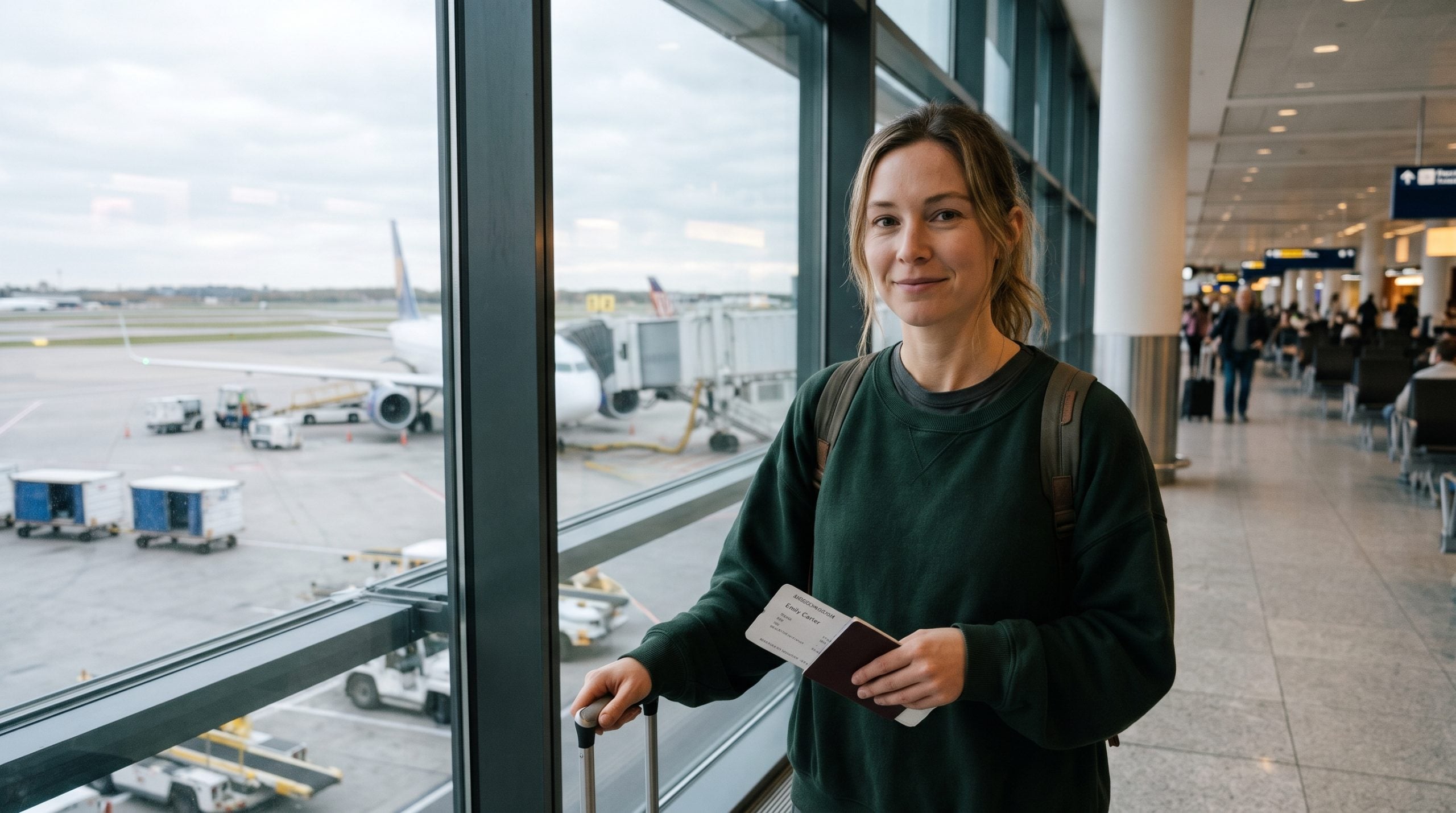
 Emily Carter
What can you bring on a plane without getting stopped at security? I spent years standing at the end of a screening lane. So I can tell you exactly where most travelers lose their time. It isn’t the line. Instead, it’s the bag. For example, picture a traveler who packed the night before in a hurry. They tossed a full bottle of sunscreen next to a power bank. Then they added a pocketknife left over from an April fishing trip. Finally, they act surprised when the belt stops and an officer waves the bag over for a second look.
So when people ask me, “What can you bring on a plane?” I don’t answer with a list right away. First, I explain how the checkpoint thinks. Once you see your bag the way the officer at the monitor sees it, packing gets easier. As a result, you’ll rarely lose anything to the bin by the exit again.
This guide answers what can you bring on a plane in plain terms. It covers what you can carry on, what has to go in checked luggage, and what can’t fly at all. It also covers the rule changes that caught people out over the last year or so. Finally, it ends with a checklist you can screenshot and use the night before your trip.
What Can You Bring on a Plane? Start with How the Checkpoint Sees Your Bag
Officers judge every item in your bag on two questions. First, can someone use it as a weapon in the cabin? Second, could it start a fire, explode, or release something dangerous at altitude? In fact, almost every rule that ever annoyed you traces back to one of those two concerns. So the answer to what can you bring on a plane usually comes down to those two tests.
However, the officer on the monitor can’t read your intentions. Instead, they read shapes and densities on a screen. For instance, picture a tightly packed bag with cables wrapped around chargers wrapped around toiletries. On screen, it looks like a dark, tangled mass, and a tangled mass earns a bag check. On the other hand, some bags keep the electronics in one layer and the liquids together. Nothing sits stacked tightly on anything else. Those bags move through without a second look.
That’s why the first lesson I’d give anyone is simple: pack for clarity, not just for space. After all, a neat bag isn’t just pleasant. It’s also faster.
The second lesson is that the officer at the checkpoint has the final say. TSA publishes a long list of items it generally permits. However, it also says plainly that an officer can refuse any item that raises concern. On the lane, I watched travelers argue that “the website said so” more times than I can count. Sometimes they were right on paper. Even so, they still missed their flight while the supervisor walked over. Therefore, if something feels borderline, pack it in your checked bag or leave it home. Just remember that checking a bag isn’t free, so compare airline baggage fees before you rely on it.
Liquids: What Can You Bring on a Plane Under the Rule?
Let’s start with the rule that fills more confiscation bins than anything else.
The rule people know as “three one one” works like this. First, each liquid container in your carry on can hold no more than 3.4 ounces (100 milliliters). Next, all those containers have to fit in one clear, quart size, resealable bag. Finally, each passenger gets one bag.
You’ve probably heard talk about this rule going away. Real movement sits behind that talk, but don’t repack your bathroom on rumors yet. In fact, the rule still applies at every TSA checkpoint in the United States in 2026. What has changed, however, is the screening side. For example, newer CT scanners at some lanes let you leave compliant liquids inside your bag. That saves time. Even so, the packing limits themselves stay the same. So if your lane doesn’t have that equipment, take the bag out like always and follow the officers’ directions.
Which Liquids Can You Bring on a Plane?
Here’s the test I gave people in line. If you can squeeze it, spread it, pump it, spray it, or pour it, treat it as a liquid. As a result, that test catches a lot of things travelers don’t think about:
- Peanut butter, Nutella, and other spreads
- Toothpaste, lip gloss, mascara, and liquid foundation
- Hummus, salsa, dips, and creamy cheeses
- Yogurt and pudding cups
- Aerosol deodorant and dry shampoo
- Snow globes (yes, really, and a lot of them at Christmas)
On the other hand, solid versions of these things pass without trouble. For example, stick deodorant, bar soap, solid shampoo bars, powder makeup, and hard cheese can all go in your carry on. None of them count toward your bag.
It’s the Container, Not What’s Left in It
This one cost people more expensive products than anything else I saw. For instance, a 6 ounce shampoo bottle with an inch left in the bottom still counts as 6 ounces. That’s because the officer looks at the container size rather than the amount inside. So buy travel bottles and decant. Otherwise, put the big bottle in checked luggage, and factor in how much it costs to check a bag.
Liquid Exceptions You Can Bring on a Plane
TSA exempts some liquids from the 3.4 ounce limit. However, you have to tell the officer about them at the start of screening. You also need to keep them separate from your quart bag:
- Medications. You can bring liquid prescriptions and over the counter medicines in reasonable quantities for your trip. Saline, eye drops, and contact solution also count here.
- Baby formula, breast milk, and toddler drinks. You can carry these in reasonable amounts. In addition, you don’t need the child with you to bring breast milk. Likewise, ice packs and gel packs that keep them cold also pass.
- Medically necessary gels and liquids, including ones for diabetes or other conditions.
Officers may give these items extra screening. For example, they may test the container or ask you to open it. That’s normal, and moreover it goes quickly when you declare them up front. In contrast, the travelers who had trouble buried a large bottle of medicine at the bottom of a backpack. Then they said nothing.
Can You Bring Duty Free Liquids on a Plane?
Say you buy liquids in a duty free shop abroad and then catch a connecting flight in the United States. You can carry them through screening if they stay in the store’s sealed, tamper evident bag. The receipt also needs to be inside. However, once you open that bag, all bets are off. For example, a friend of mine lost a beautiful bottle of whisky on a connection. He had opened the bag on the first flight to check the receipt.
Electronics and Batteries: What Can You Bring on a Plane in 2026?
If the liquids rule annoys people most, battery rules matter most. That’s because lithium batteries pose the single biggest fire concern in the cabin today. Regulators and airlines also tightened the rules a lot in 2026. So if you only read one section on what can you bring on a plane, read this one twice.
Laptops and Phones You Can Bring on a Plane
Personal electronics with installed batteries can go in either your carry on or your checked bag. That includes laptops, tablets, phones, and cameras. Still, I’d always keep them with you. After all, if a device overheats in the cabin, the crew can deal with it. If it overheats in the hold, however, nobody notices until it becomes a serious problem. For that reason, turn devices fully off, not on sleep, if they go in checked luggage.
Can You Bring Power Banks on a Plane?
This is where people get caught. The FAA requires you to keep spare lithium batteries in your carry on only. That covers power banks and phone charging cases. In other words, they never go in checked bags. That also includes the bag the agent tags at the gate when the overhead bins fill up. So before you hand it over, pull the power bank out and keep it in your personal item.
Size matters too. Most power banks fall under 100 watt hours, so you can generally fly with those. For example, a standard 20,000 mAh phone charger usually sits under that line. Meanwhile, banks between 100 and 160 Wh usually need airline approval in advance. Passenger flights won’t take banks over 160 Wh at all. So look at the label. If it shows no watt hour rating and you can’t work it out, expect questions. Our full guide to taking a power bank on a plane walks through the math.
Airline Limits on Power Banks
In addition, airlines went further than the base rules this year. For example, since April 20, 2026, Southwest allows only one lithium ion power bank up to 100 watt hours. Delta and American now cap passengers at two power banks of up to 100 Wh each. American also bans recharging a power bank onboard or keeping it hidden or out of reach during flight. Several airlines also want power banks within reach rather than in the overhead bin. That way, a crew member can spot one if it starts smoking.
What Changes in January 2027
Furthermore, the international rules have already shifted. Since 27 March 2026, ICAO has limited each passenger to two power banks and banned recharging them in flight. More arrives on January 1, 2027, when IATA’s new rulebook takes effect. At that point, nearly all airlines are expected to also bar using a power bank to charge devices in flight. Therefore, if you fly international carriers early next year, plan on using the seat outlet instead.
My practical advice, then, is simple. Carry one good, name brand power bank with a clear rating on the label. Also, check your airline’s page the week you fly. Above all, if a power bank looks swollen, cracked, or gets hot while charging, don’t fly with it at all.
Smart Luggage
You can fly with a suitcase that has a built in battery for charging or tracking. However, you must be able to remove the battery. So if you’re checking the bag, take the battery out first and carry it in the cabin. Otherwise, most airlines won’t accept the bag.
Small trackers are a different story. An AirTag in your luggage runs on a tiny coin cell that’s allowed in checked bags. If you’re shopping for one, see our pick of the best luggage tracker. It’s also cheap insurance if your suitcase ever becomes delayed baggage.
Vapes and E Cigarettes
These go in your carry on only. Because they run on batteries, they can’t go in checked bags. Likewise, you can’t use or charge them on the plane.
Sharp Objects and Tools: What Can You Bring on a Plane?
This is where my old bin filled up with pocketknives. In fact, I collected hundreds of them. Most belonged to people who simply forgot the knife hung on their keychain.
Leave These Out of Your Carry On
- Knives of any kind, including small pocketknives and multitools with blades (plastic or round bladed butter knives are the exception)
- Box cutters and razor blades
- Hammers, crowbars, and drills
- Tools longer than 7 inches
- Baseball bats, golf clubs, hockey sticks, and similar sports gear you can swing
- Cleavers, ice picks, and swords
Sharp Items You Can Bring on a Plane
- Scissors with blades shorter than 4 inches measured from the pivot point
- Tools shorter than 7 inches, like small screwdrivers and wrenches
- Disposable razors and cartridge razors (however, a safety razor’s removable blade can’t go in your carry on)
- Knitting needles and crochet hooks
- Nail clippers and most tweezers
Fortunately, almost everything on the first list can travel in checked luggage. Just wrap sharp edges so a baggage handler doesn’t get cut.
Here’s a habit that saved a lot of my regulars their favorite knife. Before every trip, empty your bag completely. That means not just the main pocket, but also every zip pocket and inside sleeve. After all, gear accumulates. Backpacks you use for camping or work cause the most trouble.
Can You Bring Firearms or Self Defense Items on a Plane?
Firearms can never go in your carry on. However, you can travel with them in checked bags under three conditions. They must be unloaded, locked in a hard sided case, and declared to the airline at the ticket counter. Similarly, ammunition goes in checked luggage in its original box or a case made for it. Since each airline sets its own extra rules, call ahead. Ask the airline directly what can you bring on a plane in your checked bag.
Firearm parts, realistic replicas, and even a single loose round in a jacket pocket all count. Every year, for example, someone shows up at a checkpoint with a gun in a carry on they “forgot about.” As a result, they face a civil penalty and often a missed flight. Depending on local law, they sometimes face arrest too. So check your bag, and then check it again.
As for pepper spray, you can pack it only in checked luggage. Even then, the limit is one small canister with a safety mechanism. Meanwhile, stun guns and tasers can’t go in carry on bags. Likewise, TSA treats self defense key chains with spikes or points as weapons.
Flammables and Hazardous Items
Some things, however, can’t fly in either bag. The usual culprits include:
- Gasoline, lighter fluid, and paint thinner
- Fireworks and sparklers
- Bear spray (this surprises campers every summer)
- Most aerosol paint and spray starch
- Torch lighters and lighter refills
- Bleach and many pool chemicals
Of course, you won’t always know where an item falls. In that case, use the FAA’s PackSafe tool to check what can you bring on a plane safely. In fact, officers rely on it themselves.
Lighters, Camp Stoves, and Alcohol
Ordinary lighters, on the other hand, follow their own rule. Specifically, you can bring one disposable or Zippo style lighter in your carry on or on your person. However, lighters generally can’t go in checked bags unless they’re empty or sit in an approved case.
Camp stoves can fly only if you clean them completely and they carry no fuel smell. In my experience, though, “I rinsed it” usually isn’t enough. Meanwhile, the fuel canisters themselves can’t fly at all.
Alcohol has limits too. For instance, drinks under 24% alcohol, like wine and beer, face no restriction in checked bags. Most spirits fall between 24% and 70%. For those, you can check up to 5 liters per person in unopened retail packaging. Anything over 70%, such as grain alcohol, can’t fly. Finally, mini bottles pass in your carry on if they fit in your quart bag. Even then, you can’t drink your own alcohol on the plane.
Food: What Can You Bring on a Plane to Eat?
Solid food generally passes in your carry on. For example, sandwiches, fruit, chips, cookies, granola bars, cooked meals and even a whole pie make it through. I once watched a man bring through a full Thanksgiving turkey. The officer gave it a long look on the screen, but in the end it flew.
The catch, however, is that wet or spreadable food falls under the liquids rule. So the sandwich passes, but the side of dressing doesn’t. The exception is a dressing of 3.4 ounces or less that sits in your quart bag. Similarly, soup belongs in checked luggage. Ice packs, meanwhile, pass if they stay frozen solid when you go through screening.
Because food can clutter the scanner image, an officer may ask you to take it out of your bag. For that reason, pack snacks together near the top.
International flights, moreover, add another layer. Customs and agricultural rules at your destination often restrict fresh fruit, meat, and plants. As a result, officers on the other end may seize something TSA let you carry out of the country. In other words, what can you bring on a plane at departure isn’t always what you can bring off it.
Medical Equipment You Can Bring on a Plane
You can bring CPAP machines, nebulizers, insulin pumps, glucose monitors, and similar devices in your carry on. In addition, most airlines don’t count them toward your bag limit. Just tell the officer about them at the start. Also, if a device shouldn’t go through the scanner, ask for a hand inspection.
Likewise, you can carry syringes with your medication, and canes, crutches, and walkers pass after screening. If you have a medical implant, you don’t need to show paperwork, although telling the officer helps. Finally, TSA Cares runs a free helpline for travelers with medical needs. You can call it before your flight to arrange help at the checkpoint.
ID and What Changed at the Front of the Line
However, knowing what can you bring on a plane only covers half the job. You also have to reach the bag belt.
REAL ID enforcement began in May 2025. Since then, adults flying domestically need a REAL ID compliant license or another accepted ID, like a passport. This year, TSA also added a paid fallback. Since February 1, travelers without compliant ID pay a $45 fee for TSA to verify their identity. TSA calls this program ConfirmID. The nonrefundable fee covers you for 10 days, so you won’t pay again at other airports during that window. Still, TSA can’t guarantee it will verify you, and the process takes longer. Therefore, treat it as a last resort and get the REAL ID.
On a brighter note, shoes got easier. TSA ended its shoe removal mandate at U.S. checkpoints on July 8, 2025. Now everyone can keep their shoes on. Even so, officers will still ask you to remove them if you set off the scanner or metal detector. So the old advice holds. Wear shoes without metal shanks or heavy buckles, and you’ll rarely have to touch them.
What Can You Bring on a Plane? My Packing Checklist
Your Carry On
Before you pack, confirm your bag meets your airline’s carry on luggage size limits. Then add:
- ID (REAL ID, passport, or another accepted ID) and boarding pass
- Quart bag with liquids at 3.4 ounces or under, packed at the top
- Prescription medications in original containers, separate from the quart bag
- Phone, laptop, tablet, and chargers, laid flat in one layer
- One or two rated power banks (check your airline’s limit)
- Spare camera batteries, terminals taped or in a case
- Solid snacks, packed together
- Empty water bottle to fill after screening
- One disposable lighter, if you need one
- Glasses, contacts, and solution
- A change of clothes and anything you can’t afford to lose
Your Checked Bag
Full size toiletries add up fast, so weigh the bag to avoid an overweight baggage fee.
- Full size toiletries and liquids
- Knives, multitools, and tools over 7 inches, wrapped
- Sports equipment like bats and clubs
- Declared, locked firearms and ammunition, per airline rules
- Spirits in unopened retail packaging, within limits
- Aerosol toiletries like hairspray (small limits apply)
Leave at Home
- Fireworks, flammable fuels, and lighter fluid
- Bear spray
- Damaged or swollen batteries
- Any loose ammunition you didn’t mean to bring
The Night Before
- First, empty every pocket of your bag, then repack
- Next, pull out anything from your last trip (knives, tools, water bottles)
- Then check your airline’s power bank rule
- Finally, look up anything you’re unsure about on TSA’s site or ask TSA on social media
A Final Word from the Checkpoint
People often think security exists to catch bad guys. Day to day, however, officers mostly help well meaning travelers who forgot something. In other words, they don’t want your shampoo. Instead, they’d much rather see your bag go through clean. They want to watch you collect your laptop and keep the line moving.
So you can help that happen. First, pack with a clear layout. Next, know the difference between a solid and a liquid. Also, keep batteries with you, always. In addition, declare medical items before anyone has to ask. Above all, if you’re unsure what can you bring on a plane, check the item or leave it home. That way, you’ll clear screening while the person behind you still digs out a forgotten pocketknife.
Frequently Asked Questions
What can you bring on a plane in your carry on?
Generally, you can bring liquids in 3.4 ounce containers inside one quart bag. You can also bring electronics, power banks, solid food, medications, and small tools under 7 inches. However, knives, weapons, and flammables stay out. For a full list, search TSA’s What Can I Bring tool.
Can I bring a full water bottle on a plane?
No, because officers will stop a full bottle over 3.4 ounces. Instead, bring it empty and fill it at a fountain past the checkpoint. TSA’s liquids rule page also has the details.
Is the liquids rule going away?
Not yet. The limit still applies nationwide, although some lanes with newer scanners let you leave liquids in your bag. Meanwhile, The Points Guy’s liquids rule guide tracks the latest changes.
Can I bring a power bank on a plane in my checked bag?
No. Spare lithium batteries and power banks have to stay in the cabin. For specifics, check the FAA PackSafe lithium battery page and your airline’s limits.
How many power banks can I bring on a plane?
It depends on the airline. For example, Southwest allows one, while American and Delta allow two. The international standard has also capped passengers at two since March 2026. TripIt’s power bank rules guide explains the details.
Do I still have to take my shoes off?
Usually not, because your shoes stay on unless you set off an alarm. In fact, NPR covered the policy change when it took effect.
What if I don’t have a REAL ID?
You can pay $45 for TSA ConfirmID. However, TSA can’t guarantee verification. For more, see TSA’s REAL ID page and AFAR’s ConfirmID explainer.
Can I bring medication over 3.4 ounces on a plane?
Yes, in reasonable amounts, as long as you declare it at the start of screening. TSA’s medications guidance explains more.
Can I bring food on a plane?
Solid food, yes. However, spreads, dips, and soups fall under the liquids rule. So if you’re unsure, check the specific item on TSA’s What Can I Bring page.
References
- Transportation Security Administration. What Can I Bring? All Items
- Transportation Security Administration. Liquids, Aerosols, and Gels Rule
- Transportation Security Administration. REAL ID
- Transportation Security Administration. Medications
- Federal Aviation Administration. PackSafe: Lithium Batteries
- The Points Guy. TSA Liquids Rule: What to Know Before You Head to the Airport
- TripIt. The Rules for Flying With Power Banks Are Changing
- AFAR. Still Don’t Have a Real ID? You’ll Need to Pay a Fee to Get Through the Airport
- NPR. Shoes Off at the Airport? TSA Gives the Pesky Rule the Boot
- AARP. TSA Ends Nearly 20 Year Checkpoint Shoes Off Mandate
- View from the Wing. American Airlines Power Bank Policy